Optimizing Python Based Spectroscopic Data Processing On Nersc Supercomputers Scipy 2019 Information Center
Get comprehensive updates, key reports, and detailed insights compiled from verified editorial sources.
History
Stay updated on Optimizing Python Based Spectroscopic Data Processing On Nersc Supercomputers Scipy 2019's latest milestones.

Video Highlights & Reports
Below is a handpicked selection of video coverage regarding Optimizing Python Based Spectroscopic Data Processing On Nersc Supercomputers Scipy 2019.
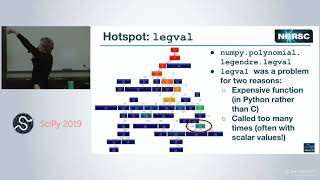
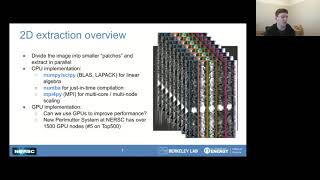
Optimizing Python Based Spectroscopic Data Processing on NERSC Supercomputers | SciPy 2019 |
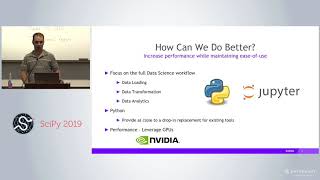
RAPIDS: Open GPU Data Science | Scipy 2019 Tutorial | Scopatz, Becker, Kraus, Gama Dessavre
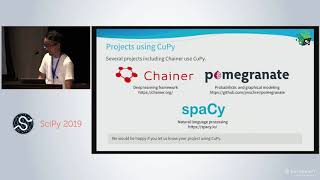
CuPy: A NumPy Compatible Library for High Performance Computing with GPU | SciPy 2019 | SciPy 2019 |
Conclusion

For 2026, Optimizing Python Based Spectroscopic Data Processing On Nersc Supercomputers Scipy 2019 remains one of the most talked-about profiles.
Key Details

Explore the primary sources for Optimizing Python Based Spectroscopic Data Processing On Nersc Supercomputers Scipy 2019.
Expert Insights
Data is compiled from public records and verified media reports.
Last Updated: June 14, 2026
Background of Optimizing Python Based Spectroscopic Data Processing On Nersc Supercomputers Scipy 2019

The RAPIDS suite of open source software libraries gives you the freedom to execute end-to-end The expectation of reproducibility in scientific work has been long established, and, increasingly, communities and funding ... Images encountered by today's scientist, with the advent of new hardware and methods in areas such as microscopy, synchrotron ... With the advent of next generation radio telescopes and laboratory instrumentation, This is a one day course that Rebecca Hartman-Baker presented at the 2020 Computing Sciences Summer Students Program. Submodular selection can be used to reduce a complex
At the National Energy Research Scientific Computing ( Okay well uh thank you for that uh our next question is from bill little are you able to monitor
Disclaimer:


