Java For Scientific Computing Sequences Series Part 2 Information Center
Get comprehensive updates, key reports, and detailed insights compiled from verified editorial sources.
Overview on Java For Scientific Computing Sequences Series Part 2

In this tutorial, I discuss how to implement transformations of In this tutorial, I discuss the implementation of rectangle and trapezoid methods for In this video, I discuss Horner's method for an efficient way of evaluating polynomials. I also implement operator overloading for ... In this video, I discuss how to implement more advanced operations such as differentiation in the symbolic functions using ... In this tutorial, I discuss how we can take advantage of the symbolic functions and Polynomials to implement the Taylor expansion ... In this video, I continue my discussion on evaluating string formatted mathematical expression in
In this tutorial, I discuss the actual implementation of the particle swarm optimization in
Detailed Analysis
Data is compiled from public records and verified media reports.
Last Updated: June 15, 2026
Key Details

Explore the main sources for Java For Scientific Computing Sequences Series Part 2.
History
Stay updated on Java For Scientific Computing Sequences Series Part 2's latest milestones.

Video Highlights & Reports
Below is a handpicked selection of video coverage regarding Java For Scientific Computing Sequences Series Part 2.
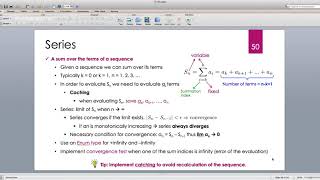
Java for Scientific Computing: Sequences & Series -- Part 2
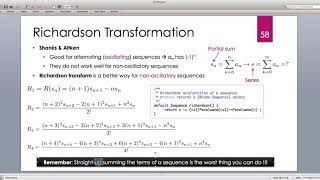
Java for Scientific Computing: Sequence Transformation -- Part 2
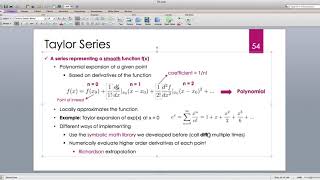
Java for Scientific Computing: Transformation of Sequences and Series
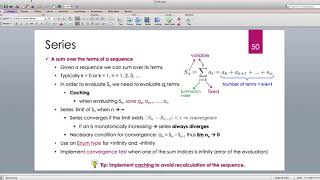
Java for Scientific Computing: Sequences & Series -- Part 3
Summary

For 2026, Java For Scientific Computing Sequences Series Part 2 remains one of the most talked-about profiles.
Disclaimer:


